Why my hair is getting darker: all the causes explained (and how to get your childhood blonde back)
Contents
Your hair is getting darker because your melanin production increases with age, especially after puberty, and because you spend less time in the sun than you did as a child. Hormones, hard water and overly rich products also play a role. Good news: this darker blonde isn't set in stone, you can lighten it gradually without bleach at the salon.
Is it normal for my hair to get darker over time?
Yes, it's a natural and well-documented phenomenon. The vast majority of blonde children see their colour darken between childhood and adulthood, often as early as adolescence. This starting blonde, what we call childhood blonde, gradually deepens because hair follicles produce more pigment as they mature. It's neither a condition nor a sign that you're not taking care of your hair properly. It's a normal biological process that affects most natural blondes at one point or another.
What are the real causes of hair darkening?
Several factors usually combine, rarely just one. Here are the five most common causes, from the most frequent to the most occasional.
Melanin and age
Melanin is the natural pigment produced by the hair follicle, it determines your hair colour from very light blonde to black. In most blonde children, follicles produce very little melanin. With puberty and then adulthood, production naturally increases, and the hair that grows in is darker than it was in your childhood. This is the number one cause, and it's completely independent of your haircare routine.
Lack of sun
As a child, you probably spent more time outdoors, in full sunshine, without even thinking about it. UV rays have a natural lightening effect on the hair strand: they oxidise the melanin already present and fade it at the surface. Less daily sun exposure, fewer outdoor holidays, and your hair no longer benefits from that natural boost. That's one of the reasons your hair looks lighter at the end of summer and darker in winter.
Hormones (puberty, pregnancy, contraception)
Hormonal changes influence hair pigmentation. Puberty is the turning point when childhood blonde starts to darken for many girls. Pregnancy and certain contraceptives can also intensify this, temporarily or more permanently altering melanin production. It's not universal, but it's a real cause reported by many women.
Haircare products and water
Some overly rich haircare products, loaded with silicones or heavy oils, leave a film on the strand that visually dulls the colour and can give the impression of darker, flatter hair. Hard water has the same cumulative effect over time. This factor doesn't darken the pigment itself, but it darkens the visual result, which amounts to the same thing to the eye.
Genetics and heredity
Finally, genetics play a part: some families have a childhood blonde that darkens quickly and significantly, while others keep a lighter base their whole lives. If your parents or grandparents went through this, you statistically have a higher chance of experiencing it too.
| Cause | Reversible with a routine? | What helps |
|---|---|---|
| Natural increase in melanin (age) | Yes, by lightening the base | Regular progressive lightening |
| Lack of sun | Yes, partly | Gentle exposure, heat-activated product |
| Hormones (puberty, pregnancy) | Yes, on visible colour | Progressive lightening, patience |
| Overly rich products, hard water | Yes, quickly | Lighten your routine, clarifying shampoo |
| Family genetics | Not on production, yes on the result | Regular lightening and maintenance |

And what could it do for your hair?
Answer a few questions and find out what result you can aim for with your colour.
Take my free diagnosisDoes childhood blonde come back on its own over time?
No, unfortunately. Once melanin production has increased, it doesn't drop back down on its own. The hair that grows in stays at its adult shade, darker. To visually get that childhood blonde back, you need to work on the existing strand by lightening it. That's exactly what a Lightening spray used regularly does: it won't change your natural melanin production, but it lightens the current colour of your lengths, tone by tone.
How to get your childhood blonde back without damaging your hair
The classic temptation is the salon for bleaching, or DIY tricks like lemon juice. The issue with the salon: the recurring cost and the damage to the strand if it's repeated every two months. The issue with lemon: citric acid lightens a little in the sun, but it permanently dries out and weakens the strand, with a result that's often patchy and brassy. It's not a method we can recommend long-term, you can read our full analysis on lightening your hair with lemon if you want all the details.
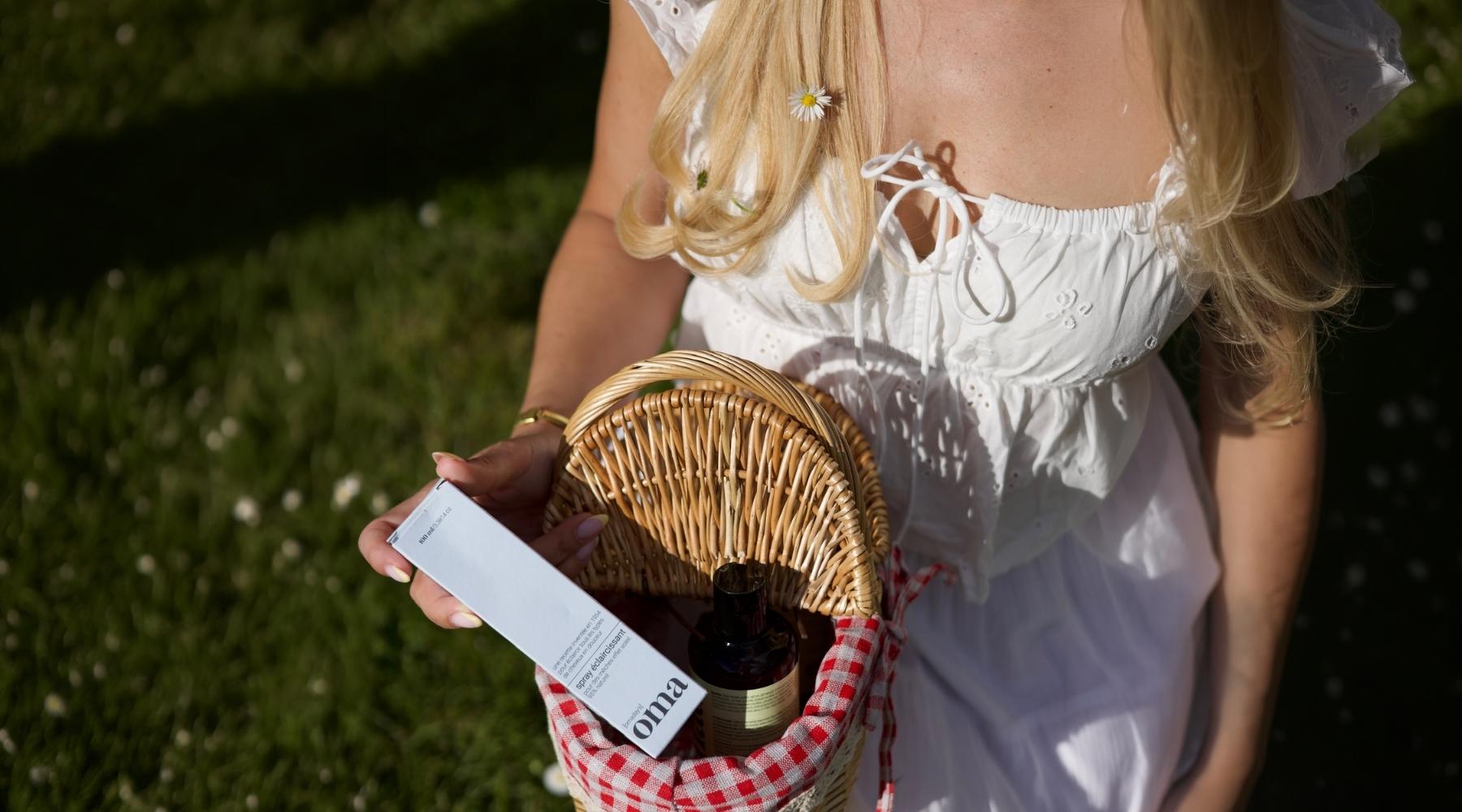
The real alternative is progressive and regular lightening that respects the strand. That's exactly what the OMAD'S Lightening spray promises, a 95% natural hair lightening care brand. Its formula is 95% naturally derived, 7 ingredients, 100/100 score on Yuka, and ammonia-free. It lightens by 2 to 4 tones, gradually, with first visible results from the first application that build with regular use, generally over 2 to 6 weeks depending on your starting base.

In practice: spray onto clean, slightly damp hair, wherever you want to lighten. Activate with heat, sun, hairdryer or open air, the warmer the better the boost. Repeat every 2 to 3 days at first, then once a week for maintenance. The product is made in our family lab in Belgium, directly inspired by the recipe of Pioupiou, Zoé's grandmother, you can read the full story on our story.
Once your base is lightened, if you want to add a specific shade, repigmenting shampoos like Vanilla Blonde (light golden tones) or Honey Blonde (warm golden tones) take over. Just keep in mind their role is different: the spray lightens the base, the repigmenting shampoos deposit colour on an already lightened base, not the other way around. Allow a maximum 2 min application, diluting slightly with your regular shampoo for a gradual result rather than a strong effect from the very first use.
If you're not sure what result to expect on your specific starting base, you can take our free hair diagnosis in just a few questions.

OMAD'S Lightening spray: lightens by 2 to 4 tones gradually, 95% naturally derived, 100/100 score on Yuka.
Discover
What mistakes to avoid when your hair has darkened
The first mistake is repeated lemon use: it dries out the strand and gives an uneven result. The second is too-frequent salon bleaching, which permanently weakens the hair if repeated every month. The third is layering too many rich products or silicones that visually dull the colour instead of lightening it. Finally, if your hair has recently been bleached or permed, go easy with any lightening product: just one application, then see how it looks before continuing.
To explore natural, low-risk alternatives in more depth, our complete guide to lightening hair naturally covers all the methods, their real limitations, and what actually works long-term.
FAQ
Why did my hair get darker after puberty?
It's a normal hormonal and biological phenomenon. Puberty often triggers a natural increase in melanin production in the hair follicle, which darkens the growing hair compared to your childhood blonde. It's not related to your haircare, and it affects the majority of natural blondes to varying degrees.
Does lack of sun really make hair darker?
Yes, partly. UV rays oxidise the melanin in the strand and naturally lighten it at the surface. Less daily sun exposure, especially in winter or indoors, deprives the hair of that boost, which accentuates the impression of darker hair from one season to the next.
Can my hair get darker because of a shampoo or a product?
Yes, visually. Products that are too rich in silicones or heavy oils leave a film that dulls the strand and gives the impression of flatter, darker colour. Hard water has a similar cumulative effect. The pigment itself doesn't change, but the visual result darkens.
Can childhood blonde come back naturally on its own?
No. Once melanin production has increased with age, it doesn't drop back down on its own and the hair that grows in stays at its new shade. To visually get that blonde back, you need to work on the existing strand with regular lightening, which is nothing like a spontaneous return.
Can lemon help me get my childhood blonde back?
Lemon lightens a little in the sun thanks to its citric acid, but it permanently dries out and weakens the strand, with a result that's often patchy and brassy. It's not a recommendable method long-term, a progressive 95% natural alternative is much kinder to the strand.
How long does it take to lighten hair that has darkened?
With progressive and regular lightening, the first changes are visible from the first application, and the result generally settles over 2 to 6 weeks depending on your starting base and how consistently you apply it. The darker the base, the more patience and consistency it takes.
Does genetics play a role in hair darkening?
Yes. Some families have a childhood blonde that darkens quickly and significantly from adolescence, while others keep a lighter base their whole lives. If your parents or grandparents went through the same hair journey, you statistically have a higher chance of experiencing it too.
If your hair is getting darker, it's neither in your head nor a done deal. Melanin, sun, hormones, products or genetics, you now know the real causes. And you also know that your childhood blonde isn't gone for good: it comes back with progressive, regular lightening that respects your strand. Over 120,000 customers have already tried this approach with the OMAD'S Lightening spray, rated 4.5/5 from 1,702 verified customer reviews. Your turn, gently, application by application.