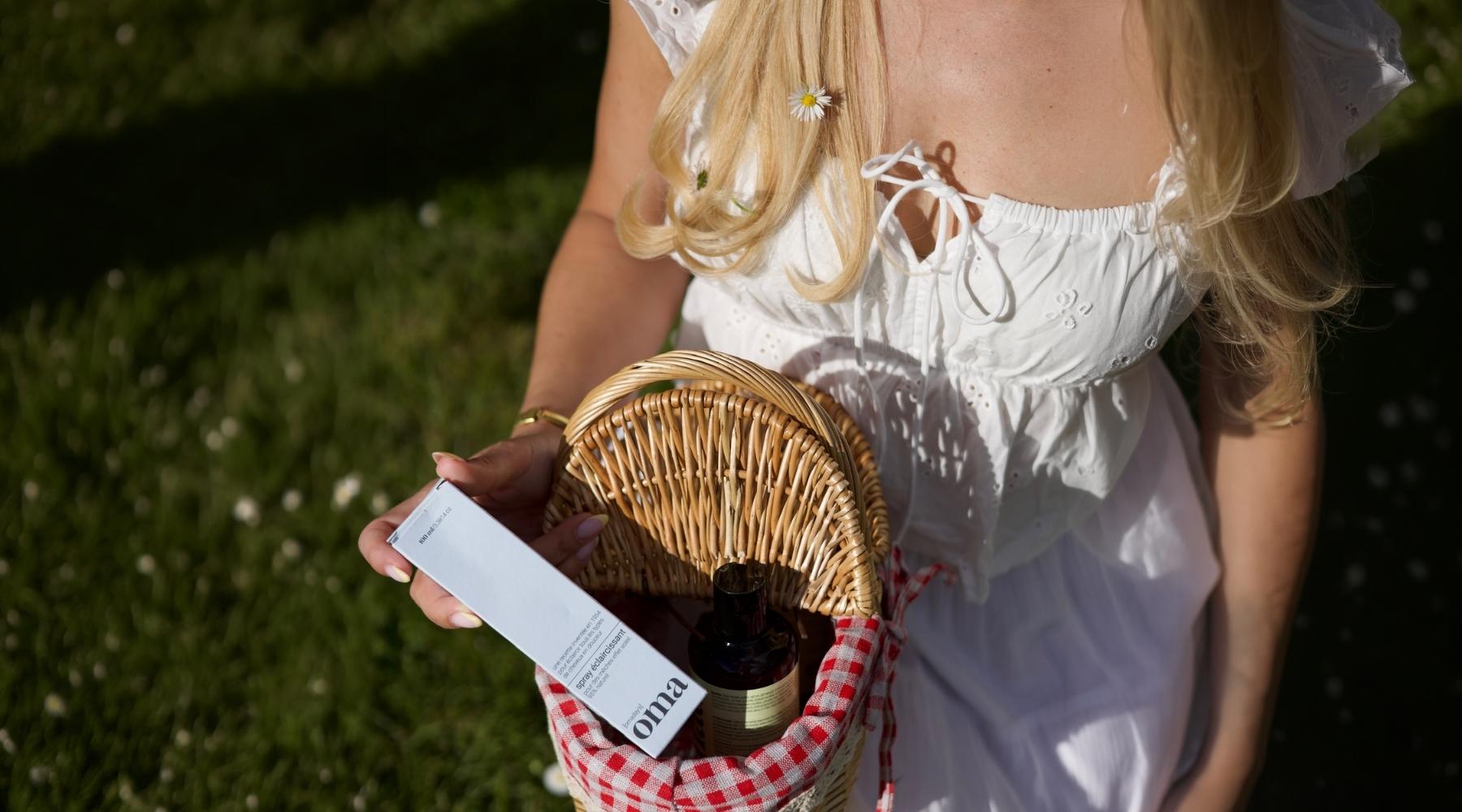
 🤍🖤 Omad's is the 3rd winner of the Sephora Prize in London! 🤍🖤
Blue shampoo: what it really does and how to use it properly
Contents
Blue shampoo neutralises the orange and copper tones that show up on bleached, highlighted or balayaged hair with a light brown, brunette or dark blonde base. Blue is the complementary colour of orange on the colour wheel: it visually cancels it out. Heads up, blondie: it doesn't correct yellow tones, that's the job of purple shampoo, and it never lightens the hair fibre.
Why use a blue shampoo?
You use a blue shampoo when your hair pulls orange or coppery, a classic phenomenon a few weeks after bleaching or a balayage on a light brown or brunette base. The blue pigment optically corrects that unwanted tone, without adding blonde pigment or changing the base.
It's a correction step, not a deep treatment. It masks a tone, it doesn't fix the cause: natural pigment still present in the hair fibre that comes back out with time, sun or washing. That's why you need to repeat it regularly, and often alternate it with your usual shampoo.
Which blue shampoo is the most effective?
Honestly, there's no universal miracle blue shampoo: how well it works depends mostly on your starting base, the pigment concentration and your consistency, not on one particular brand. A good blue shampoo combines enough pigment load with a formula that doesn't dry out the hair too much.
What to look at before buying: the concentration of blue pigments (too low and nothing happens, too high and it can turn your hair grey), whether there's drying alcohol at the top of the ingredient list, and how well it suits your actual base. A very concentrated blue shampoo on an already light base can give an overly ashy result.
If you find yourself using it every week to fix orange tones that keep coming back, the real question is where that shift is coming from. Often, it's a sign of an initial bleaching that was too harsh and too fast. A lightening spray that lightens your base gradually is exactly what limits that kind of abrupt shift, more on that below.
Blue or purple shampoo, how do you avoid getting it wrong?
Blue shampoo and purple shampoo don't correct the same tone, and mixing them up gives a botched result. Blue neutralises orange and copper, purple neutralises yellow. Using one instead of the other leaves the unwanted tone untouched, or worse, creates a new off tone.
| Tone to correct | Typical base | Right move |
|---|---|---|
| Orange, copper | Bleached light brown or brunette, highlights, balayage | Blue shampoo |
| Yellow | Light blonde, polar blonde, grey with yellow tones | Purple shampoo |
| Red, bright orange | Very dark bleached base | Neutralise with blue, never with purple |
If your issue is yellow on an already light base, purple shampoo is what you need, not blue. As a reminder, purple shampoo never neutralises red or orange: these are two different colour theory problems, so two different tools.
How long should you leave blue shampoo on?
Generally, a blue pigmented shampoo is left on for 1 to 3 minutes maximum, never longer, to avoid an overly grey or dull result. The exact time always depends on the formula and the concentration of the product you're using, so follow the instructions on the packaging first.
If it's your first time using it, start with a short application and check the result once your hair is dry. You can adjust next time. Leaving it on too long on an already light base can give a bluish or greyish tone that doesn't look natural at all.
How do you wash your hair with a blue shampoo?
Apply the blue shampoo to wet hair, massage focusing on the areas pulling orange, leave it on for the time indicated on the product, then rinse with cool or lukewarm water. For a gentler, more gradual effect, you can dilute a small amount with your usual shampoo rather than using it neat.
This dilution trick avoids the dramatic and sometimes unflattering effect of a first use that's too concentrated. After rinsing, a nourishing treatment is welcome: colour-correcting pigments tend to dry out the hair fibre if used too often, especially on already bleached hair.
The real problem behind orange tones, and how to avoid it at the source
If you have to reach for the blue shampoo at every wash, the issue isn't the shampoo, it's probably the way your hair was lightened. A one-off, harsh bleaching lifts natural pigment quickly and unevenly, which often means going through a very visible orange or coppery phase.
Gradual lightening works differently: pigment lightens in stages, application after application, which gives a more even result and fewer off tones to fix afterwards. That's exactly the principle behind the OMAD'S lightening spray: a 95% naturally derived formula, ammonia-free, that lightens by 2 to 4 tones with consistency, without putting the hair fibre through a single shock.

It's not a blue pigment or a purple pigment: the spray doesn't add any tint, it lightens your existing base (light brown, dark brown, dark blonde). That's why it pairs so well afterwards with a toning shampoo like Blond Vanille or Blond Miel, which deposit a precise tone on an already lightened base. The spray scores 100/100 on Yuka and holds 4.5/5 from 1,702 approved customer reviews.
Mistakes to avoid with blue shampoo
The first mistake is using it on yellow: it does nothing, you need purple. The second is leaving it on too long thinking that longer means better correction: the result can turn greyish, especially on a light base.
The third mistake is making it your everyday shampoo. Using it too often dries out the hair fibre and adds nothing compared with targeted use once or twice a week. Finally, not nourishing afterwards is a common mistake: a colour-correcting pigment is never a treatment, you need to compensate with a proper nourishing step.
Our routine for a clean blonde, with no tones to fix in a hurry
Rather than chasing tones once they're already there, the OMAD'S logic is to lighten the right way from the start: gradually, without shock, to limit the off tones that force you to keep correcting. The spray is used on clean, slightly damp hair, every 2 to 3 days at first, then once a week for upkeep.
If your hair is already blonde but turning yellow (not orange), purple shampoo stays your ally, left on for 1 to 3 minutes maximum, never longer. And to nourish the hair fibre between lightening sessions, the night serum goes on the lengths and ends once or twice a week.

Not sure what result to expect on your specific base? You can take the free hair diagnostic or browse the full OMAD'S range to build your routine.
FAQ
Why use a blue shampoo?
Because your hair is pulling orange or coppery, a common tone after bleaching or a balayage on a light brown or brunette base. Blue pigment, complementary to orange, optically neutralises that tone. It doesn't change the base and never replaces lightening.
Which blue shampoo is the most effective?
There's no universal miracle brand: effectiveness depends on pigment concentration, the formula (avoid drying alcohol at the top of the list) and above all your actual base. If you need it too often, the issue probably comes from an initial bleaching that was too harsh at the source.
How long should you leave blue shampoo on?
Generally 1 to 3 minutes maximum, never longer, to avoid an overly grey result. The exact time varies with the formula used, so always follow the product instructions and adjust after a first short application.
How do you wash your hair with a blue shampoo?
Apply to wet hair, massage the affected areas, leave on for the indicated time, rinse with cool or lukewarm water. You can dilute a dose with your usual shampoo for a gentler effect. Always finish with a nourishing treatment, colour-correcting pigment dries out the hair fibre.
What's the difference between blue shampoo and purple shampoo?
Blue neutralises orange and copper, typical of bleached light brown or brunette bases. Purple neutralises yellow, typical of light or polar blondes. Using one instead of the other corrects nothing, or creates a new unwanted off tone.
Does blue shampoo damage your hair?
Used too often or too concentrated, a pigmented shampoo can dry out the hair fibre, especially on already bleached hair. Targeted use, once or twice a week, followed by a nourishing treatment, limits that risk. It's never a treatment in itself, just a tone correction.
How do you avoid needing an emergency blue shampoo every week?
By lightening gradually rather than through harsh bleaching. Lightening in stages limits the orange tones that often show up after a single shock to the hair fibre. That's the principle of regular, gentle lightening rather than permanent after-the-fact correction.
Blue shampoo is still a good occasional fix for correcting an annoying orange tone. But if you have to use it constantly, it's a sign you're better off rethinking the way you lighten in the first place. A gradual, 95% natural routine saves you from chasing tones, blondie.