 🤍🖤 Omad's is the 3rd winner of the Sephora Prize in London! 🤍🖤
How to use a purple shampoo without drying out or over-toning your hair
Contents
You've finally found your purple shampoo, and now the question hits: how do you use it without turning your blonde into purple streaks, or ending up with totally dry hair? You're not alone, Blondie, it's the question we get asked most right after purchase. Between leave-in time, frequency and hair type, there are a few simple rules to know. We'll walk you through everything, no fluff, and we'll also show you why this shampoo alone is never enough to get the blonde you actually want.
A purple shampoo should be used 1 to 2 times per week maximum, with a leave-in time of maximum 2 minutes before rinsing, on blonde or grey hair that's going yellow. The longer you leave it on, the more intense the purple effect, but the risk of mauve streaks shoots up just as fast. Its pigment neutralizes yellow and orange tones, it doesn't lighten your base.
What is a purple shampoo actually for?
A purple shampoo contains a violet pigment, the complementary colour of yellow on the colour wheel. Applied to blonde or grey hair, this pigment visually neutralizes yellow, orange or copper tones that appear over time, from pollution or UV exposure.
It's designed for bleached blondes, cool or icy blondes, highlights and balayage that's going brassy, as well as grey or white hair that yellows. At OMAD'S, this role is filled by the anti-yellow tones shampoo, a 92% natural formula that specifically neutralizes red and yellow tones without re-pigmenting towards golden or honey.
How to apply a purple shampoo, step by step
The method is the same whether you're using a classic purple shampoo or a 92% natural anti-yellow tones version. Here are the steps to follow for a clean result with no unwanted mauve effect:
- Wet your hair with lukewarm water, never hot (heat opens the cuticle and increases the risk of over-toning).
- Apply a small amount of shampoo into the palm of your hand, on its own or mixed with a pigment-free shampoo to reduce the purple intensity. Rub your hands together to spread the product evenly, then apply to your hair.
- Massage for a few seconds, focusing on the areas that yellow the most (roots, highlights, ends).
- Leave on for maximum 2 minutes, especially during the first uses. Zoé says it often: it's better to under-dose and repeat next time than to leave it on too long and risk mauve tones. Purple shampoo is part of a regular routine, you don't need a spectacular result from the very first application, at the risk of damaging your hair or ending up with unwanted tones.
- Rinse thoroughly with cool or lukewarm water until the water runs clear.
- Finish with a nourishing treatment, the anti-yellow formula isn't designed to deeply moisturize.

How often should you use a purple shampoo?
The right frequency is 1 to 2 times per week, no more. Daily use or using it too often dries out the hair and leaves a visible purple cast, especially on very light or porous hair.
If your hair yellows very quickly (swimming pool, intense sun, hard water), you can go up to two applications a week, but never beyond that without taking a break. On a darker or less exposed base, once a week is more than enough to keep your blonde cool and fresh.
Does purple shampoo actually lighten hair?
No. A purple shampoo doesn't add any levels of lift, it neutralizes a tone that already exists on an already light base. This is a key distinction to understand before buying: if your base is brunette or dark brunette, a purple shampoo will do almost nothing visible.
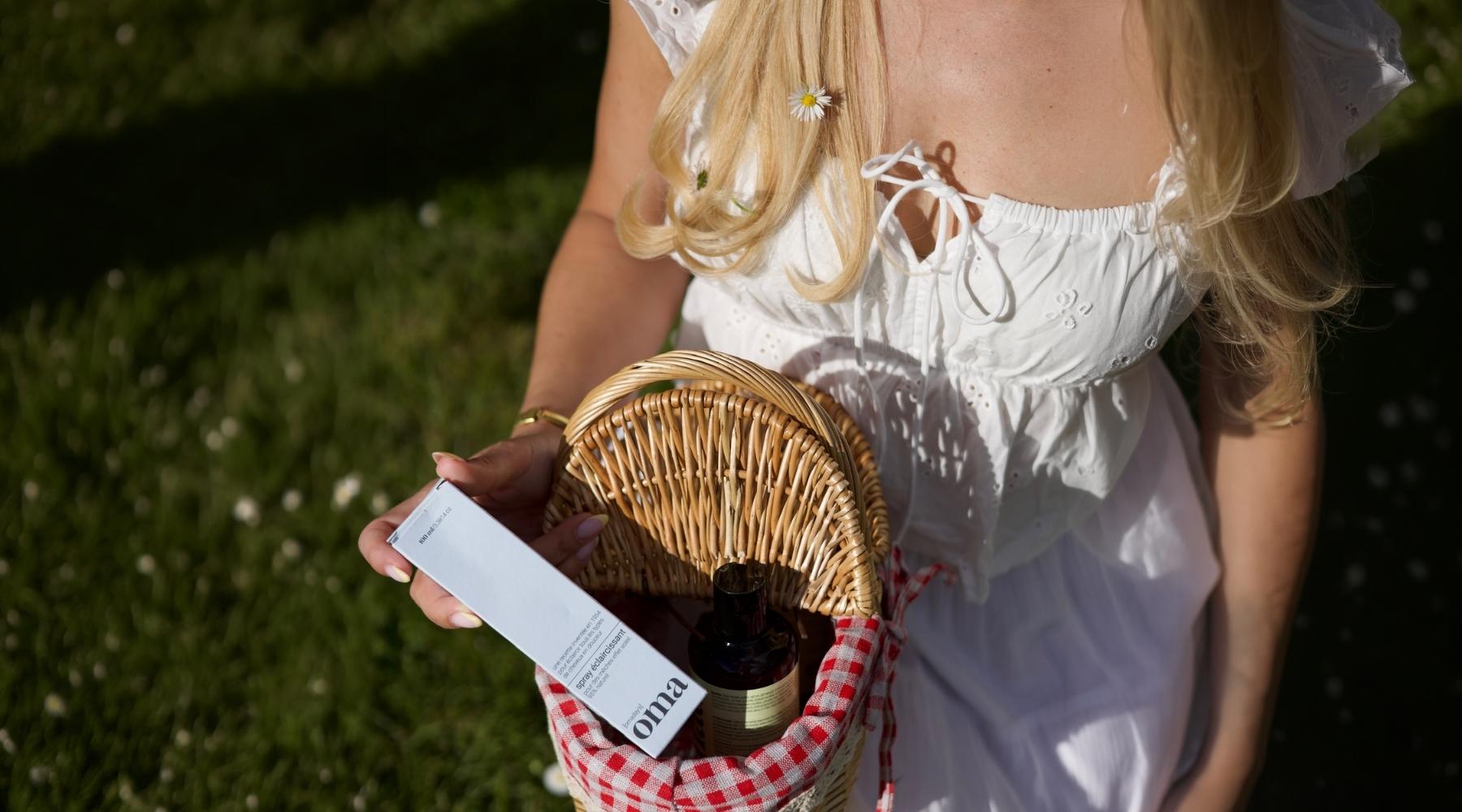
To actually lighten a base, you need a different product. The OMAD'S Lightening spray works on exactly that: it lightens 2 to 4 levels progressively, with first results visible from the very first application. Important to clarify: it adds no blonde pigment, it lightens an existing base (brunette, dark brunette, dark blonde) by lifting part of its melanin. The blonde that appears was already there, underneath.
Our routine: anti-yellow tones shampoo and lightening spray, each with its own role
This is the point that confuses most Blondies: purple shampoo and lightening spray don't do the same job, and mixing them up leads to false expectations. Here's how to tell them apart clearly.
| Product | Role | Frequency | What it changes |
|---|---|---|---|
| Lightening spray | Lightens the existing base | 2 to 3 times/week then 1 time/week for maintenance | Lifts 2 to 4 levels progressively, without added pigment |
| Anti-yellow tones shampoo | Neutralizes yellow/red tones | 1 to 2 times/week, leave on maximum 2 minutes | Corrects the tone, doesn't lighten the base |
| Vanilla Blonde or Honey Blonde shampoo | Deposits a golden or honey tint | 1 to 2 times/week, leave on 2 to 5 min | Re-pigments an already lightened base |
In a complete routine, the logical order is simple: first lighten progressively with the spray, then, once the base is light enough, correct or enhance the tone with the right shampoo. The Vanilla Blonde shampoo awakens light golden tones, the Honey Blonde shampoo stays on warmer tones, and the anti-yellow tones shampoo neutralizes when the base is pulling too yellow.

The spray is made in our family lab in Belgium, while the shampoos are made in France. Across 1,702 verified customer reviews, the spray has an average rating of 4.5/5, which says a lot about the consistency of results when the routine is followed. You can also take the free hair diagnostic to see what result is realistic for your specific base.

What would it look like on your hair?
Answer a few questions and find out what result you can aim for on your colour.
I'm taking my free diagnosticTo go deeper into the lightening part of the routine, our complete guide to lightening hair naturally covers every step, from diagnosing your base to maintaining the result.
What mistakes should you avoid with a purple shampoo?
- Leaving it on too long: beyond 2 minutes, the risk of mauve streaks or roots shoots up fast, especially on very light hair. The longer the leave-in time, the more intense the effect, but the result quickly becomes unpredictable.
- Using it too often: more than twice a week, the hair dries out and loses its softness.
- Applying it on a base that's too dark: without a light base, the violet pigment has nothing to neutralize, the effect stays invisible.
- Confusing it with a lightener: a purple shampoo will never add levels of lift, only a product designed to lighten the base does that.
- Expecting an impressive result from the very first use: a gradual, safe effect is better, even if that means mixing the purple shampoo with a pigment-free shampoo to reduce its intensity.
- Never moisturizing after: the anti-yellow formula isn't nourishing, a night serum once or twice a week makes up for that nicely.
To browse all the products for a consistent blonde routine, you can also check out the complete OMAD'S range.
FAQ
How do you use a purple shampoo on blonde hair?
Apply it to wet hair, focusing on the areas that yellow the most (roots, highlights, ends), leave on for maximum 2 minutes, then rinse with cool or lukewarm water. One to two applications a week is enough to neutralize yellow tones without drying out the hair.
How often should you use a purple shampoo?
The ideal frequency is 1 to 2 times per week, never more. Using it too often dries out the hair and can leave a visible purple cast, especially on a very light base or porous hair.
Does purple shampoo dry out hair?
Used more than twice a week or left on for more than 2 minutes, yes, it can dry out the hair. Used at the right frequency and for the right duration, then followed up with a nourishing treatment, it stays risk-free.
Does purple shampoo lighten hair?
No, it doesn't add any levels of lift. It only neutralizes yellow or orange tones on an already light base. To actually lighten a brunette or dark base, you need a product designed for that, like a lightening spray made with 95% natural ingredients.
How long should you leave a purple shampoo on?
Maximum 2 minutes. The longer the leave-in time, the more intense the purple effect, but the risk of mauve tones shoots up very fast, especially on very light or white hair. It's better to under-dose at the start and repeat the application next time if needed.
Can you mix purple shampoo with another shampoo?
Yes. Mixing a small amount of purple shampoo with a pigment-free shampoo in the palm of your hand reduces its intensity and gives a more gradual result. It's useful at the start, when you don't yet know how your hair reacts.
What's the difference between a purple shampoo and a lightening spray?
Purple shampoo neutralizes an existing tone on an already light base, it doesn't change the level of lightness. The lightening spray, on the other hand, lightens the base by 2 to 4 levels progressively, without adding any blonde pigment: it reveals a blonde that was already there beneath the melanin.
Does purple shampoo work on grey or white hair?
Yes, it's actually one of its best uses: grey or white hair often yellows over time, and the violet pigment effectively neutralizes that yellowing to restore a cleaner, brighter grey or white.
In a nutshell
A purple shampoo used properly is simple: 1 to 2 times per week, maximum 2 minutes of leave-in time, rinse with cool or lukewarm water, and a small amount you can dilute with a pigment-free shampoo to take it easy. But keep the key point in mind: it neutralizes, it doesn't lighten. If your real goal is to go back to blonde from a brunette base, it's the OMAD'S Lightening spray, used consistently, that does that work, before the purple shampoo takes over to refine the tone. Take the free hair diagnostic to know where to start on your hair.