Lighten hair naturally before and after: what really works (and the real timelines)
Contents
Lightening your hair naturally, before and after, is possible, but it plays out over several weeks, not overnight. Lemon gives a fast effect but dries out and weakens the hair. Chamomile works gently on already light hair. A 95% natural lightening spray lets you gain 2 to 4 tones in 2 to 6 weeks, without breaking the hair.
Blondie, you've surely seen before/after photos on Instagram or YouTube with miracle homemade recipes. Some are real, others show a result achieved at the cost of ruined hair you can't see in the photo. We're going to sort out the true from the false, method by method, with real timelines and the honest limits of each one.
Lightening blonde hair naturally: is it really possible?
Yes, blonde hair can gradually lighten without going through a salon bleach, as long as you accept a result that builds over several weeks rather than instantly. Natural methods (chamomile, honey, 95% natural spray) slightly open the cuticle and act on the melanin already present, without blasting it away all at once like a classic bleach.
The nuance to know: these methods work on already light or medium bases (blonde, light brown, brown). On very dark hair, the natural effect stays subtle, whatever the method chosen. It's a question of melanin to shift, not marketing miracles.
How to lighten hair: natural methods under the microscope
There are four big families of natural methods to lighten hair: lemon, chamomile, honey, and 95% natural formulas designed specifically for it. They don't have the same timeline, the same result, or the same impact on the hair.
Lemon: the false good idea
Lemon lightens a little, especially in the sun: citric acid opens the cuticle and the UV reaction does the rest. But it's very drying: hair gets dehydrated, becomes porous, brittle, and the result often turns an uneven yellowish shade down the lengths. It's the textbook example of a method that "works" in today's photo, but causes lasting damage underneath.
Chamomile to lighten hair: a real but limited effect
Chamomile very slightly lightens already light blondes and revives golden tones. The effect is real, but weak, slow and limited to already light hair. On dark hair, it does almost nothing. It's a boost of radiance for an existing blonde, not a transformation.
Honey: subtle and demanding
Mixed with water or a conditioner, honey releases a little natural hydrogen peroxide. The lightening is very subtle and very gradual, the processing times are long, and the result stays unpredictable from one head of hair to another. The real benefit observed is more the nourishing side.
The 95% natural lightening spray
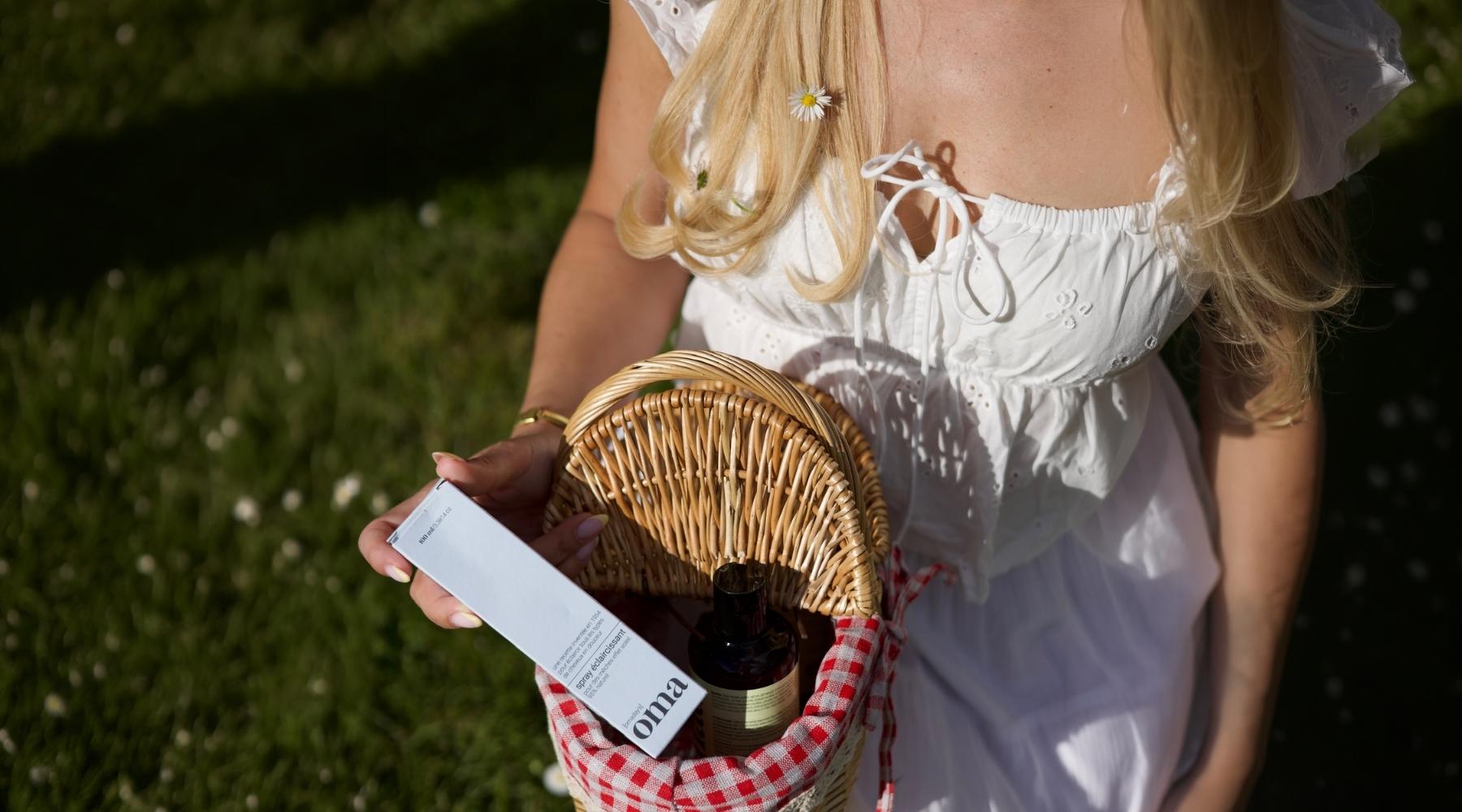
The OMAD'S lightening spray is formulated with 95% natural origin ingredients, with 7 ingredients, and has a 100/100 score on Yuka. It doesn't add any blonde pigment: it lightens an existing base (brown, dark brown, dark blonde), revealing a lighter blonde. The first results are visible from the very first application, and the lightening builds with consistency, up to 2 to 4 tones in 2 to 6 weeks.

Before and after: what do real natural results look like?
A real natural before/after is built over several weeks, not in a single application. Here's what the methods mentioned actually deliver, applied consistently.
| Method | Real effect | Observed timeline | Risk for the hair |
|---|---|---|---|
| Lemon | Lightens slightly in the sun, often yellowish | A few days to a few weeks | Dries out, makes hair porous and brittle |
| Chamomile | Revives golden tones on already light bases | Several weeks | Low, but no effect on dark hair |
| Honey + conditioner | Very subtle lightening | Several weeks, long processing times | Low, real nourishing effect |
| 95% natural lightening spray | 2 to 4 tones, gradual | 2 to 6 weeks with consistency | Hair preserved, controlled application |

And on your hair, what would it look like?
Answer a few questions and discover the result you can aim for on your colour.
Take my free diagnosis

This table shows the real gap between a method that "works fast" in a photo (lemon) and a method that lasts over time without damaging. 1,702 customer reviews give the lightening spray an average score of 4.5/5, which confirms that the gradual result is the one that lasts.
The routine that delivers the before/after promise without damage
To get a real before/after without sacrificing your hair, consistency counts more than quantity. Here's the simple routine to follow with the lightening spray:
- Spray onto clean, slightly damp hair, on the areas you want to lighten.
- Activate with heat: sun, hairdryer, or open air. The warmer it is, the more the effect is boosted.
- Repeat every 2 to 3 days at the start, then once a week to maintain.

If your base is rather coloured or already lightened and you want to keep a cool blonde, a purple shampoo then neutralises yellow tones, with a short 1 to 2 minute processing time. The spray lightens the base, the shampoo deposits or corrects the tone: two distinct, complementary roles. For a complete routine, you can check out our guide to lightening naturally.
Mistakes to avoid for a successful before and after
The first mistake is comparing a lemon result achieved in a day with a result built over several weeks: they're not the same time scales, nor the same damage to the hair. The second is stacking methods at the same time (lemon and chamomile on the same day, for example): the hair takes several assaults without you knowing what actually worked.
The third mistake, common on grey or white hair: expecting a lightening effect. With no melanin left, there's nothing to lighten. On these bases that turn yellow, the solution is a neutralising purple shampoo, not a lightening product.
When should you use a blue shampoo after a toner?
After a toner, you generally let 2 to 3 shampoos pass before introducing a blue shampoo, giving the tone laid down by the toner time to settle. After that, blue shampoo is used about once a week to neutralise the orange tones that naturally reappear with washing. In our current ranges, it's the purple shampoo that neutralises yellow tones on blonde or bleached bases.

OMAD'S lightening spray: lightens by 2 to 4 tones gradually, 95% natural origin, 100/100 score on Yuka
Discover
FAQ
Lightening blonde hair naturally, is it really possible?
Yes, as long as you accept a gradual result. A 95% natural lightening spray used regularly gains 2 to 4 tones in 2 to 6 weeks, without the harshness of a salon bleach. Chamomile or honey work too, but in a more subtle and slower way.
How do you lighten hair naturally starting from a dark base?
On a dark base, the effect of natural methods stays more discreet because there's more melanin to shift. The lightening spray remains the most consistent method: it gradually lightens the existing base without adding pigment, with results visible from the very first application.
Chamomile to lighten hair, does it really work?
Yes, but only slightly. Chamomile revives golden tones and lightens already light blondes a little. It's a boost of radiance, not a transformation, and it has almost no effect on a dark base.
When should you use a blue shampoo after a toner?
Generally after 2 to 3 shampoos, giving the toner's tone time to set. After that, weekly use is enough to neutralise the orange tones that come back with successive washes.
Is lemon a good solution for a natural before and after?
No, it's not recommended. Lemon lightens a little in the sun, but it dries out and lastingly weakens the hair, leaving it porous and brittle. The result visible in a photo often hides damaged hair underneath.
How long does it take to see a real before and after with a lightening spray?
The first results are visible from the very first application, and the lightening builds with consistency, up to 2 to 4 tones in 2 to 6 weeks depending on your starting base and how often you apply it.
Does a lightening product work on grey or white hair?
No. With no melanin left, there's nothing to lighten. If this hair turns yellow, the solution is a neutralising purple shampoo, not a lightening product.
Blondie, the only before/after that really counts is the one that lasts over time without damaging your hair. Take your free hair diagnosis to find out what result to expect on your hair, and discover the story behind the formula on our story.